Kingston Missing Middle White Paper

City of Kingston

Kingston, Ontario

2022
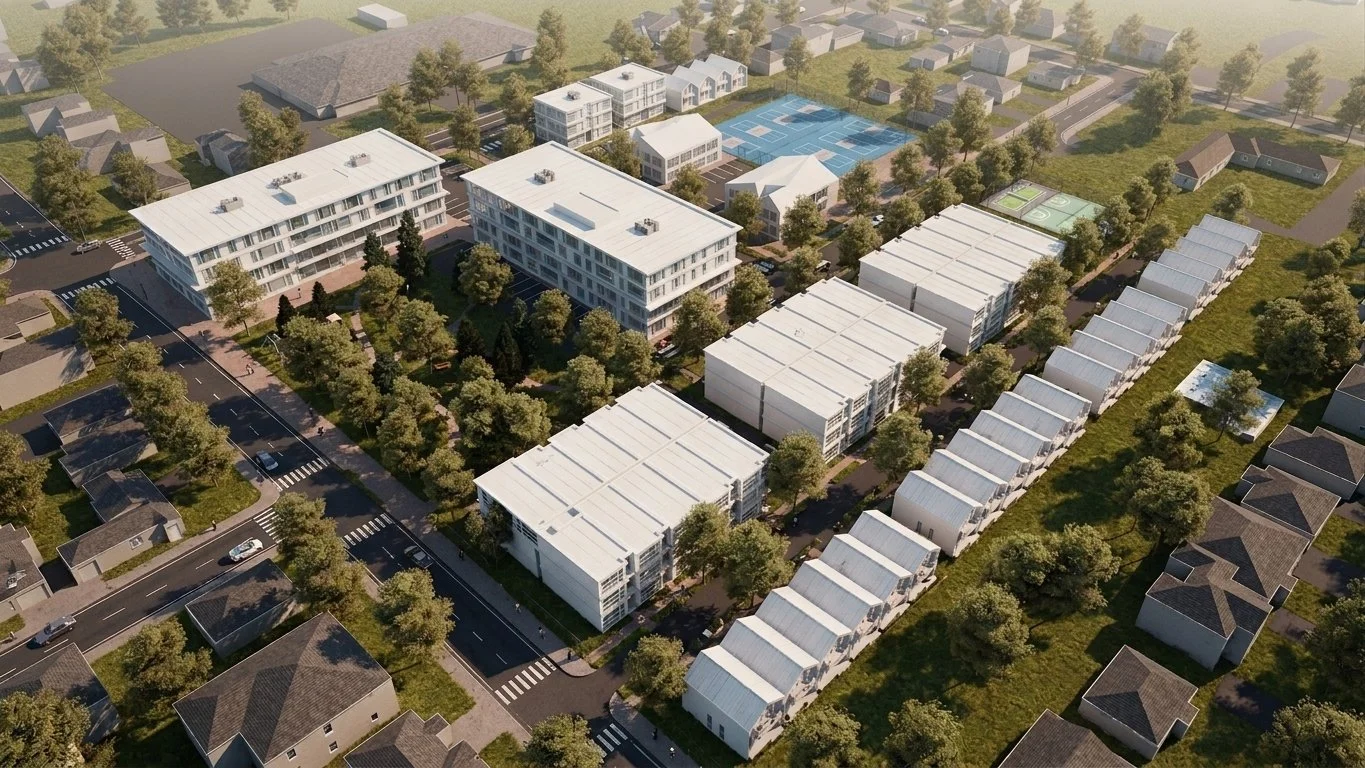
To support the City of Kingston in meeting its housing and density targets, Re:public Urbanism was engaged to author a research paper focused on missing middle housing. The report explores a range of human-scaled housing forms that fall between single-detached homes and high-rise apartment buildings, including duplexes, triplexes, rowhouses, and low-rise apartments. These types of housing provide a more diverse and flexible range of options for residents, and they can help cities achieve gentle density increases while maintaining the character of existing neighbourhoods.
The analysis helped define how these housing typologies function within the specific context of Kingston. It considered where these forms already exist, how they have changed over time, and what role they can play in supporting the city's overall housing goals. The paper reviewed Kingston’s existing housing stock to understand which missing middle forms are currently present, where they are concentrated, and how their distribution has evolved.
In addition to local analysis, the report compared Kingston’s housing trends with those of similar municipalities across Ontario and Canada. This comparative approach helped identify broader trends, as well as gaps in Kingston’s housing supply that could be addressed through targeted policy and planning.
Defining Missing Middle Housing
“Missing Middle Housing” is a term that refers to housing forms which provide for multiple residential units on a single lot that are low-rise, or human scale, such as duplexes, side-by-side duplexes, triplexes, townhouses, and smaller low-rise apartments. The term “middle” refers both to the location of these housing types on the spectrum of housing types between low-rise single-detached housing and high-rise apartment buildings, while the term “missing” refers to trends of the past several decades that have seen the development industry and municipal governments focused on the creation of either very low-rise single family or semi-detached dwellings or high-rise apartment buildings leading to a housing inventory that does not meet the needs of many households.
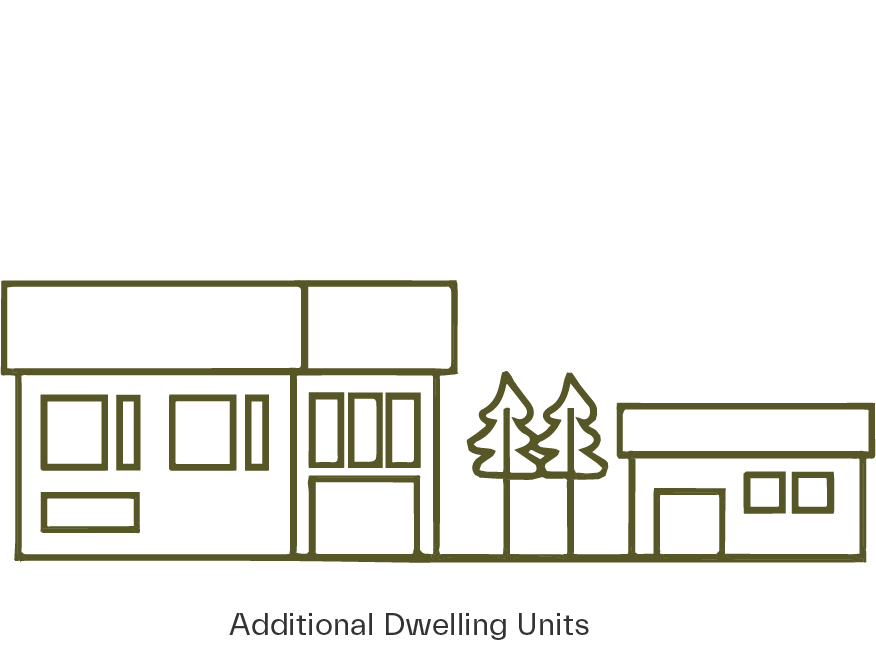
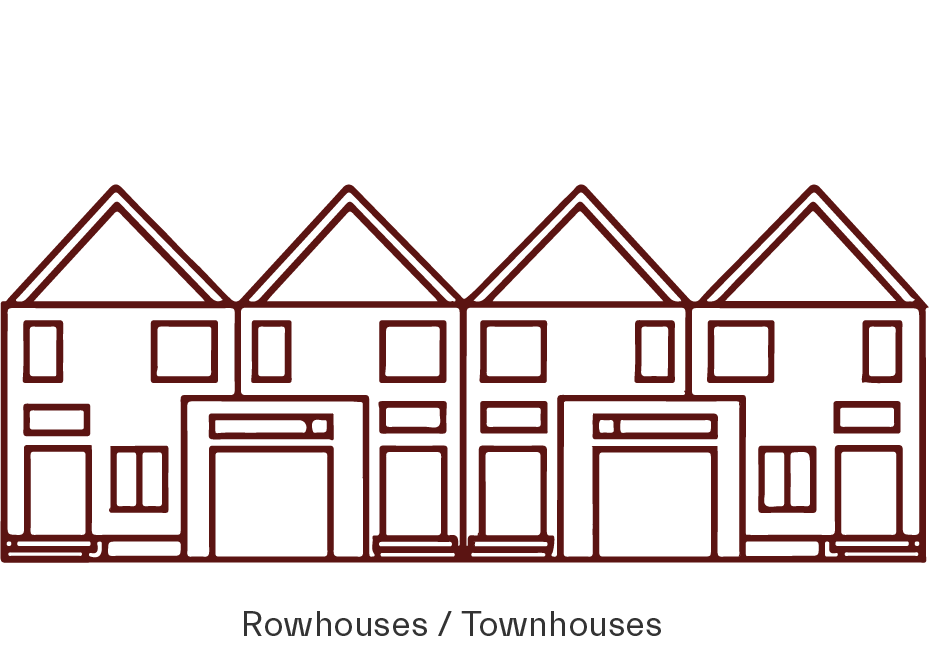
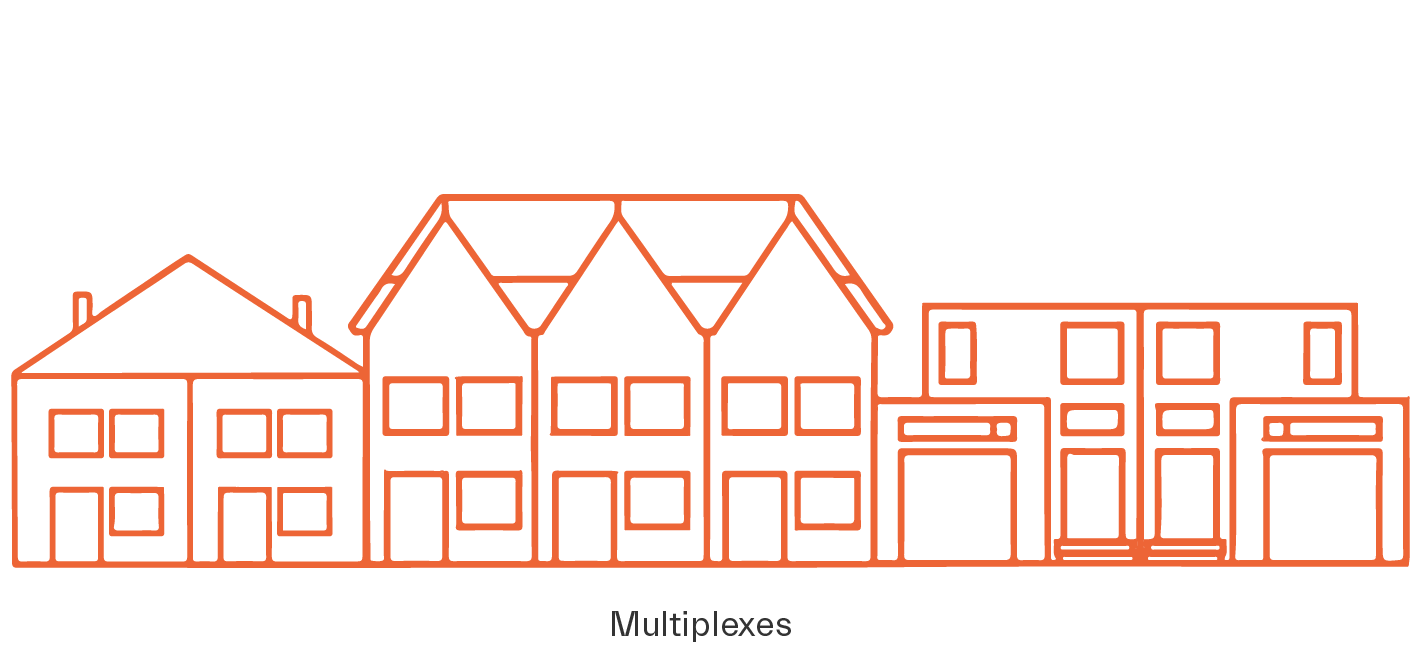
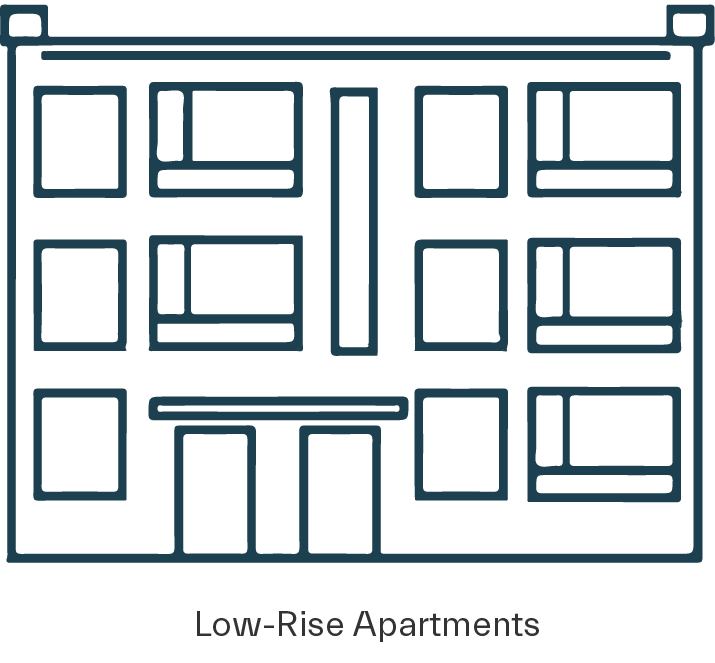
The paper begins by defining what missing middle housing is and is not, and identifies 4 main typologies of missing middle housing in the Kingston context: Additional Dwelling Units, Multiplexes, Rowhouses/Townhouses, Low-Rise Apartments.
Missing Middle Housing in Kingston
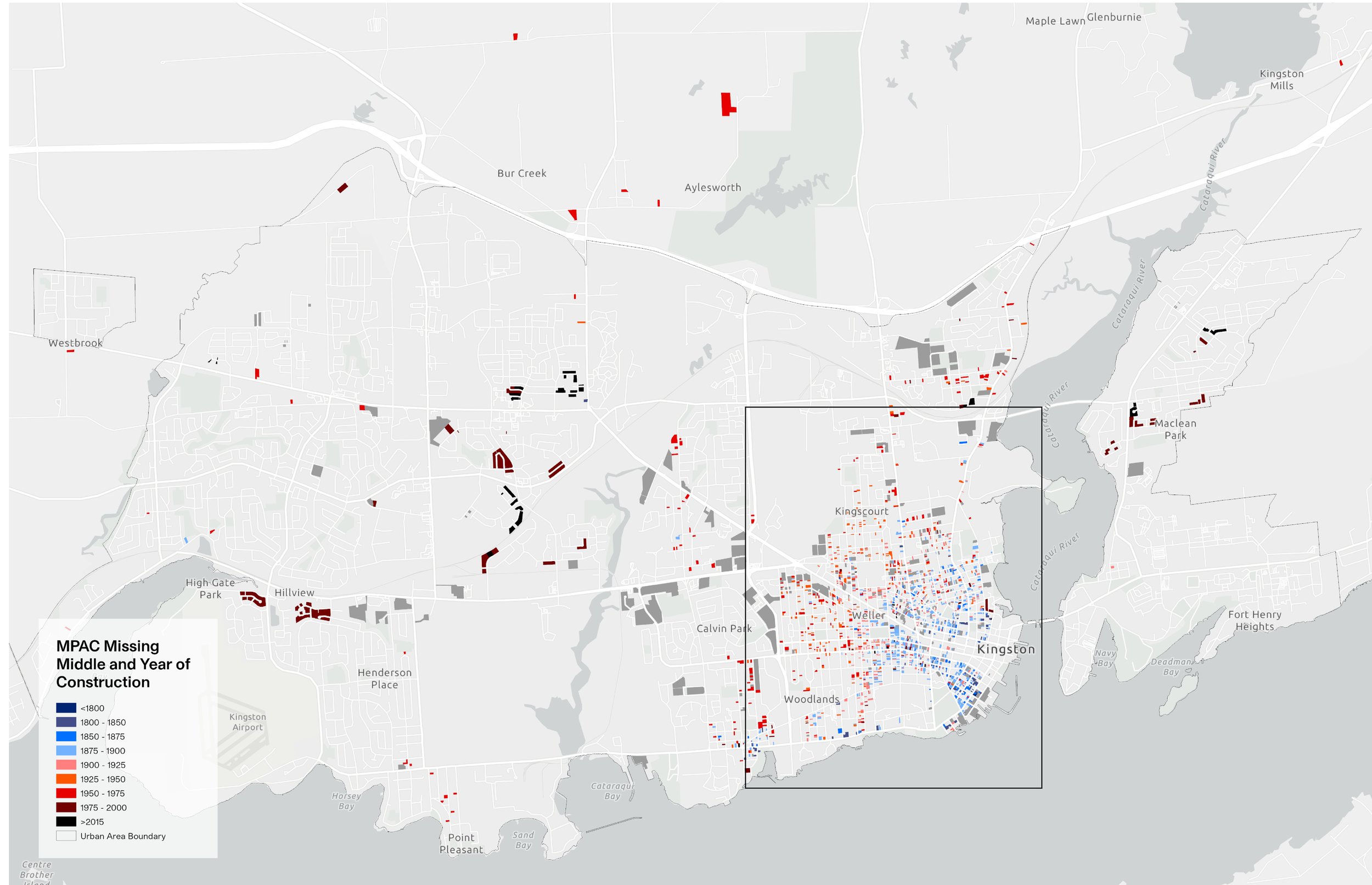
The paper reviews the breakdown of the housing stock in Kingston and how the City compares to similarly sized cities across the province and country. This review seeks to understand the current state of missing middle housing in Kingston and identify the types of missing middle housing that already exist, where they are located, and when they were constructed in order to identify trends and patterns and better tailor solutions to the issue of supplying missing middle housing.
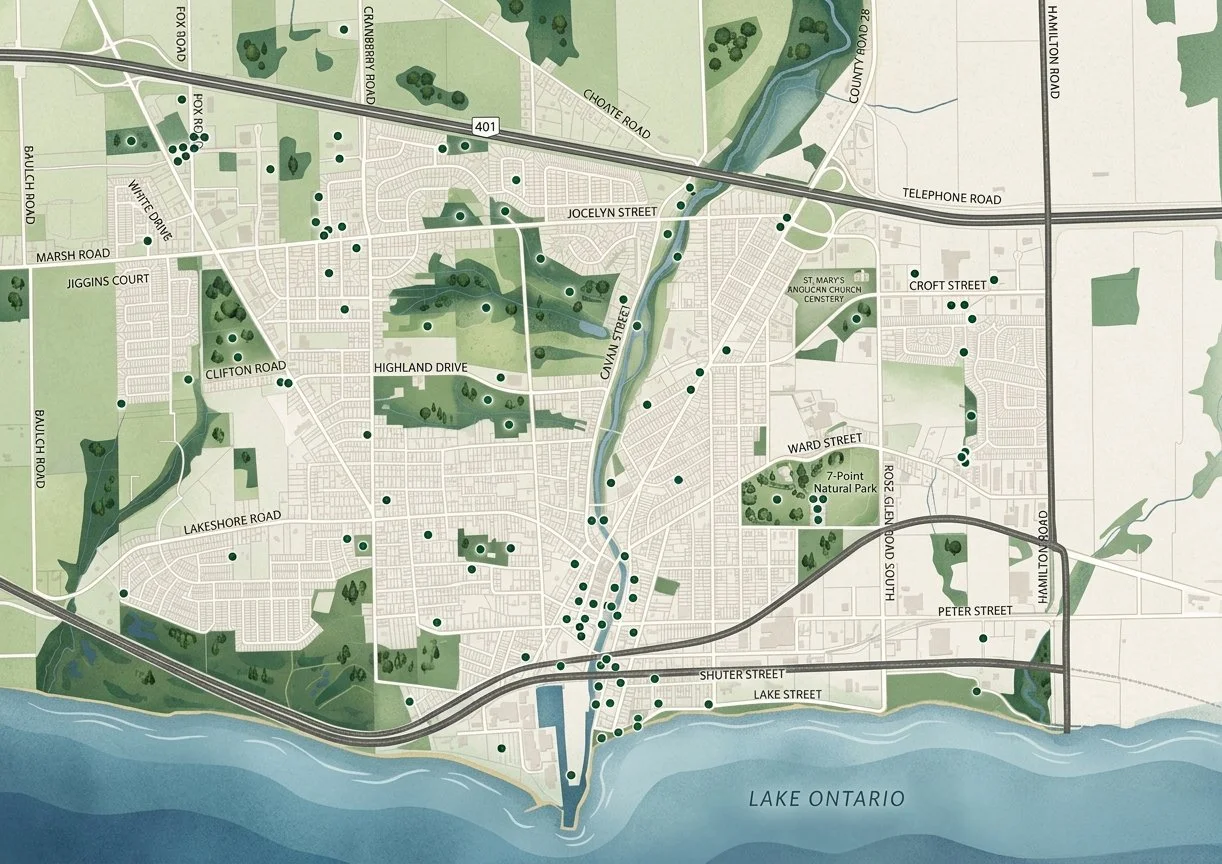
Location of the Missing Middle Housing

Missing Middle Housing and Year of Construction

Best Practices
The paper also presents several North American examples of cities where notable efforts have been made to encourage missing middle housing. These cities include Toronto, Edmonton, Victoria and Minneapolis. In addition, Montreal has been included as it is one of the few cities where missing middle housing forms a significant portion of the city’s housing stock. These examples have been analysed to assist in understanding different potential approaches to supporting missing middle housing and potentially understand key ingredients to helping Kingston find its own success in increasing the diversity of housing through the missing middle housing.
Census 2021 “Missing Middle Housing”


Project Contact

Paul Hicks
Partner | Urban Planner
hicks@republicurbanism.com
Featured Projects
-
![]()
Cornwall Community Housing Development Plan
-
![]()
Port Hope Land Inventory
-
![]()
West Nipissing Land Use Strategy
-
![]()
Toronto Zoo Master Plan
-
![]()
Strathroy Downtown Master Plan
-
![]()
Sarnia Waterfront Master Plan